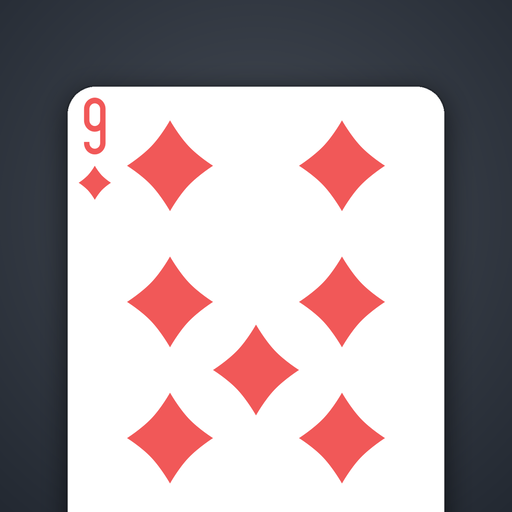
The rules exactly as the game implements them — the same text the app shows on its own Rules screen.
Players and cards
Nine is played by four, each for themselves, with a 36-card pack: six to ace in each of the four suits. The whole pack is dealt, one card at a time, so everyone starts with nine cards.
The aim is to get rid of your cards before anybody else does.
The table
Each suit makes one row on the table, and every row grows out of its nine: down through the eight and the seven to the six, and up through the ten, jack, queen and king to the ace. A row has no gaps — a card can only be put next to a card already there.
So there are only ever two kinds of move:
- a nine, which opens a new row for its suit;
- the card next to either end of a row that is already open: the eight or the ten beside a lone nine, the seven below an eight, and so on.
Play
Whoever holds the nine of diamonds opens the deal with it. Play then goes clockwise, one card per turn.
If you have a card that fits, you must play one — you may not hold it back. When you have several, you choose which. You may pass only when nothing in your hand fits, and everyone sees that you passed.
Winning a deal
The deal ends the moment someone puts down their last card. Everyone else scores penalty points:
| What | Penalty |
|---|---|
| Each card left in hand | 1 point |
| Each pass during the deal | 1 point (house rule: 0, 1 or 2) |
The player who went out scores nothing for cards, but still pays for any passes they made on the way.
The match
The deal moves one seat to the left after each hand. Deals continue until someone’s total reaches the match limit — 50 points unless you choose 30 or 100. When that happens, the match ends after the deal, and the lowest total wins.
Tactics
- A card you play lets the next card in its row be played — by whoever holds it. Before you put a card down, ask who it helps.
- Hold the cards that block other people’s runs for as long as you have something else to play.
- Open a nine when you hold more of its suit, not when it is the only one you have.
- A pass tells the table what you do not have. The computer opponents remember it — and so can you.